Cedar Privacy, Chain Link, or Ornamental Iron: How to Actually Choose
The right fence for your yard depends on what you're trying to solve, not on which one is cheapest to put up.
September 4, 2026 · 3 min read
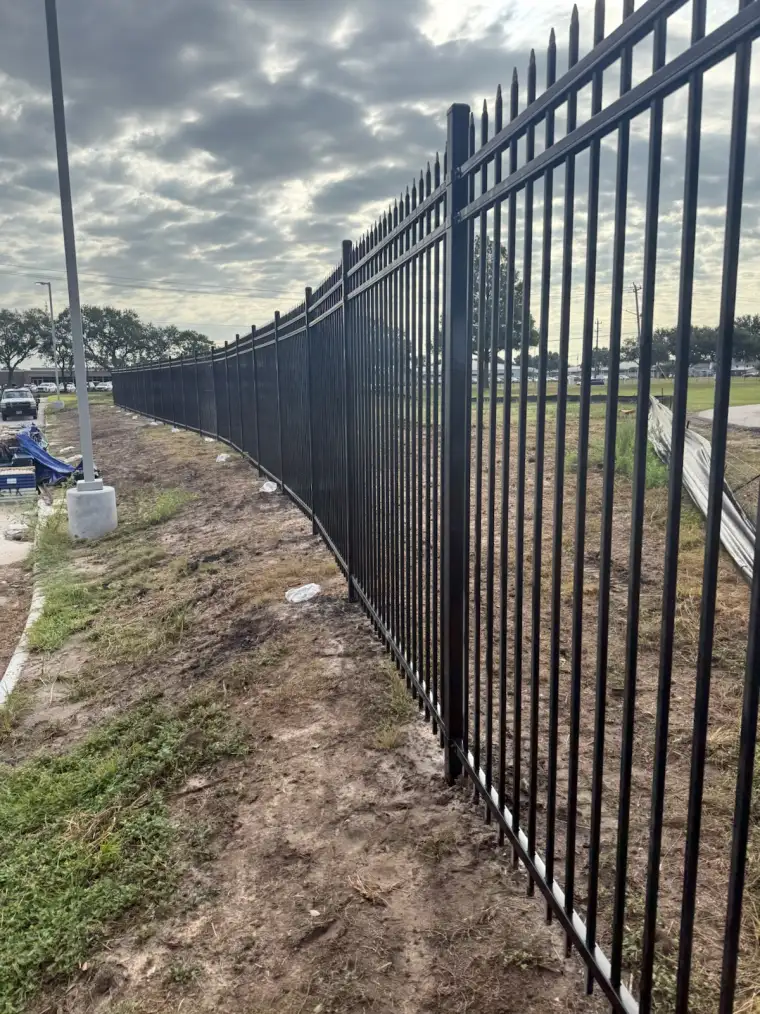
Most of the calls we get start with some version of the same question: which fence is better, wood or chain link or iron. That's the wrong question to lead with, because each of the three is built to solve a different problem, and the one that's right for your front yard is often the wrong choice for your back yard on the same lot.
Cedar privacy: for keeping the yard yours
A cedar privacy fence exists to close off sightlines. If the goal is a back yard where the neighbors aren't looking in while you're at the grill, or a space where a dog can run without a visitor at the fence line setting it off, board-on-board or shadowbox cedar does that job better than anything else we build. It also takes the edge off street noise more than an open fence will, though it won't erase it. Fresh cedar comes in warm and orange-toned and weathers over a season or two to a silver-grey that a lot of homeowners actually prefer, which is worth knowing before you decide whether to seal it.
The tradeoff is airflow and sightline in the other direction too. A fully closed privacy fence can make a narrow side yard feel tighter, and it blocks your own view of the fence line from the house, which matters if you want to keep an eye on a pool or a play area from the kitchen window.
Chain link: for containment without concealment
Chain link doesn't hide anything and it isn't trying to. What it does well is hold a boundary at the lowest ongoing cost of anything we install, on both the residential and commercial side. It's the right call around a dog run, a work yard, a storage area, or a commercial lot where you need a secure perimeter but don't need it screened. Galvanized mesh holds up well against Gulf Coast humidity over the long run; a vinyl-coated option adds a bit more corrosion resistance and comes in a couple of finish colors if you want it to blend into a fence line rather than stand out.
Where chain link falls short is exactly where cedar succeeds: it offers no privacy at all, and on a residential lot close to the street that can be a dealbreaker even when the price is right.
Ornamental iron: for a boundary you want to see through
Ornamental iron sits between the other two. It marks a clear boundary and adds real curb appeal, especially set on brick columns along a street-facing lot, but it doesn't block light or airflow the way a solid privacy fence does, and it doesn't disappear visually the way chain link tends to. It reads as a finished, permanent boundary rather than a utility fence, which is why we use it most on front and side yards where the owner wants the property to look defined without closing it off. Powder-coated black iron holds its finish well here, though any coated metal fence benefits from an occasional look for scuffs or scratches where corrosion can start, given how humid it gets close to the coast.
You don't have to pick just one
A lot of the yards we work on end up using more than one. Iron on brick columns along the street for curb appeal, cedar privacy around the back for the pool or the patio, maybe chain link on a side yard nobody sees. There's no rule that says a property has to match front to back, and matching the fence to what that specific stretch of yard needs to do usually produces a better result than picking one style and running it around the whole lot.
If you're not sure which of the three fits your situation, that's exactly what a site visit is for. We do free, no-obligation on-site estimates and we'll walk the property with you and talk through what each option actually does for that particular stretch of fence line, not just what it costs to install.
Pasadena Fence Co. — (281) 998-9190
Call (281) 998-9190More articles
Why Fences Lean on Pasadena's Clay (and What Actually Stops It)
The reason a five-year-old fence starts leaning here almost never has to do with the wood. It has to do with what's under it.
After the Storm: What to Do With a Damaged Fence Before You Call Anyone
What's repairable, what isn't, and what's worth photographing before anything gets moved.