After the Storm: What to Do With a Damaged Fence Before You Call Anyone
What's repairable, what isn't, and what's worth photographing before anything gets moved.
September 4, 2026 · 3 min read
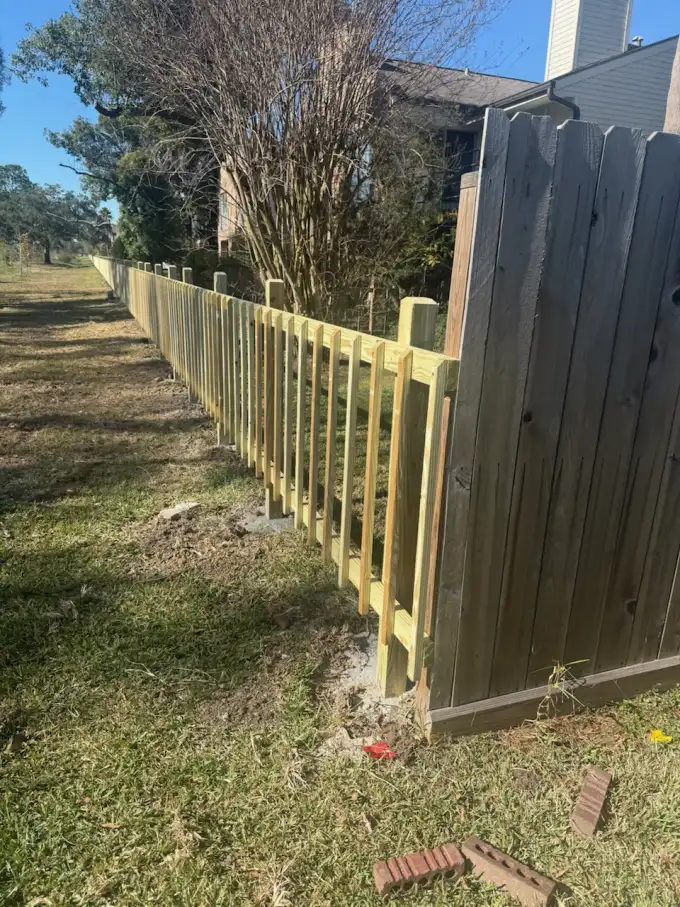
High wind is just part of living on the Gulf Coast, and a fence is one of the first things on a property to take the hit. A downed limb, a gust that catches a solid privacy run like a sail, a delivery truck that clips a gate post backing out of a drive. Before anyone starts moving debris or pulling boards off, it's worth taking a few minutes to look at what actually happened, because that changes both what gets fixed and what an insurance carrier will want to see.
What's usually repairable
A single panel blown out, a handful of pickets cracked or missing, one post leaning but still standing, a gate knocked off its track. That's the kind of damage that's almost always a repair rather than a full replacement, and it's usually a fast one. We match existing materials and styles as closely as we can find them, so a repaired section doesn't stand out against the rest of the run once it's done.
What usually isn't
Multiple posts snapped off at grade, a long stretch of privacy fence pushed over as one racked unit, or ornamental iron that's been bent and twisted out of true is a different situation. Iron in particular doesn't bend back cleanly once it's been forced; a section like that is almost always more sensible to replace than to try to straighten. The honest answer, once we've looked at it, is sometimes that patching a badly damaged run costs more in the long run than doing that stretch fresh, and we'll tell you that directly rather than talk you into a repair that won't hold.
Be careful with the temporary fix
It's a natural instinct to prop a leaning section back up and lash it to a neighboring post until someone can come look at it, especially if it's exposing a pool or a yard where a dog gets out. That's fine as a short-term measure, but don't mistake a section that's standing upright again for a section that's actually sound. Hardware that's been forced or a post that's cracked below the soil line at grade can look stable propped up and still fail the next time real wind hits it. If you do a temporary prop, treat it as temporary, and keep an eye on it rather than assuming it's holding the way it looks like it is.
What to document before cleanup starts
- A wide shot of the whole damaged run, not just the worst spot, so the full extent is visible in one frame
- Close-ups of where posts broke or pulled out of the ground, and of any panels that are cracked rather than just fallen
- A shot of anything that fell onto the fence, a limb or debris, still in place before it's cleared
- The date, even just in your phone's photo metadata, since that's often what a carrier asks to confirm damage matches the storm date
It's tempting to clear everything right away, especially if a downed section is blocking a gate or a drive. If it's safe to leave in place for even a day, do the photos first. Once debris is stacked and boards are pulled apart, it's much harder to reconstruct exactly how the damage happened, and that's usually the first thing anyone reviewing a claim wants to see.
Insurance and the fence line
Many homeowner's policies do cover wind damage to a fence, but coverage terms vary by carrier and policy, so it's worth a call to your own agent rather than assuming either way. What we can tell you from experience is that clear before photos and a written estimate move a claim along faster than anything else. We give upfront, written pricing with no hidden fees before any repair work begins, which is exactly the kind of documentation a carrier tends to want.
If a storm has come through and left you with a damaged fence, we offer fast response times and we serve Pasadena, Deer Park, La Porte, South Houston, and Pearland. A free, no-obligation on-site estimate will tell you honestly which of those two it is, and either way we'll walk you through it before any work starts.
Pasadena Fence Co. — (281) 998-9190
Call (281) 998-9190More articles
Why Fences Lean on Pasadena's Clay (and What Actually Stops It)
The reason a five-year-old fence starts leaning here almost never has to do with the wood. It has to do with what's under it.
Cedar Privacy, Chain Link, or Ornamental Iron: How to Actually Choose
The right fence for your yard depends on what you're trying to solve, not on which one is cheapest to put up.